

Nice glass of methane, anyone?
The ever-fascinating American site, Truthout, had more to say on March 23rd about ‘fracking’ for subterranean gas. Since this process is now licensed for exploration in Scotland, it is not just an overseas issue – we may find ourselves facing the same problems.
The Pennsylvania town of Dimock complained bitterly in 2009 about a water well explosion allegedly caused by fracking. The Pennsylvania Department of Environmental Protection (DEP) ran tests and agreed that Cabot Oil and Gas Corporation had allowed methane and other contaminants to seep into nearby groundwater. Affected residents filed a lawsuit. The broader Environmental Protection Agency (EPA) Region 3 did its own study and said the water ‘did not show levels of contamination that could present a health concern’ – though it did agree to look further at two homes where arsenic had been detected in the water supply.
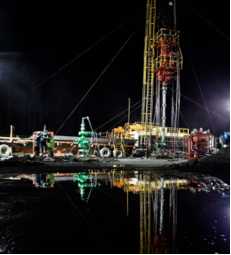 Critics demanded to know why the EPA was issuing a statement before the full testing had been completed. They collected the EPA test summaries from six of the eleven families concerned and had the samples reviewed by independent experts – who found that the summaries actually did report explosive levels of methane, heavy metals and hazardous chemicals. In four of the six summaries, methane levels exceeded the 7 mg per litre actionable threshold under Pennsylvania law. One of the test results showed methane levels at seven times that limit. Dozens of other contaminants, including heavy metals and chemicals used in the hydraulic fracturing process, were detected, although safe levels have not been established for a majority of these chemicals. Water Defense has now called for the complete test results to be released by the EPA for further analysis, citing inconsistencies in the available data. Best of luck.
Natural gas wells owned by Cabot Oil and Gas in Dimock, Pa., in December 2009. (Photo: Fred R. Conrad / The New York Times.


