Conservation and Heritage in Planning
On Monday 22nd September, Arran Civic Trust has invited Stuart West to present a talk on Conservation and Heritage in Planning. Stuart is the manager of the Development and Marine Planning function at Orkney Islands Council, where he has lived for the past eight years. He studied archaeology at Manchester University and Architectural Conservation at Edinburgh College of Art. He was Orkney’s Conservation and Heritage Planner prior to taking on his present role in 2012. He has worked in Planning for the past ten years and is presently the joint-chair of the Heart of Neolithic Orkney World Heritage Site Management Board and the Chair of Heads of Planning Scotland Development Planning Committee. He oversees the cyclical production and review of the Orkney Local Development Plan.
Orkney has 19 inhabited isles, a population of 21,500 in 11,400 households; 622 listed buildings, 347 scheduled monuments and 6 existing conservation areas plus 1 World Heritage site. There is a huge legacy including WW1 and WW2 sites at Scapa Flow. Orkney has strong Parish settlement communities.
There is a settlement pattern and crofting pattern with traditional rural housing. In 2010 the Local Development Plan was updated with the production of the 2010 Proposed Plan and the policies regarding the housing in the countryside were revised. Local Lists of significant structures are currently being produced. The current policy means that buildings of historic merit are no longer eligible for 1:1 replacement. Supplementary Guidance has been introduced which defines historic merit in Orkney and includes the following types of buildings and structures:
- Vernacular
- Traditional construction – natural materials: stone, earth, clay, slate and timber. In 1830 steamers started to come bringing Caithness stone and Welsh slate
- Non traditional buildings and structures – mainly wartime
- Other buildings and structures on Historic Scotland’s own statutory lists
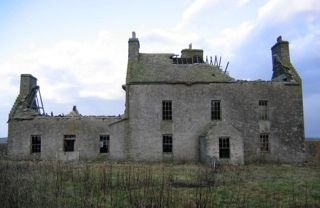
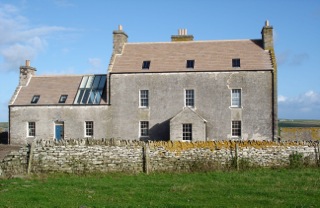
A CORE PRINCIPLE in the supplementary guidance is that the retention and preservation of buildings, which feature on Orkney local list, will be encouraged. This should avoid demolition of significant buildings. An example is illustrated below of before and after renovation, a project, which was also a recipient of a Council Heritage Grant.