

Book Review
Becoming Animal, An Earthly Cosmology by David Abram (Pantheon Books, 2010).
This is a deeply impressive and powerful book, but also a difficult one to describe. The Voice can do no better than quote Rex Weyler of Greenpeace, wrote this about Becoming Animal:
Ecologists today must ask a difficult question: Are we succeeding? Is the human enterprise changing quickly enough? We glimpse forests ticking away, deserts growing, and temperature rising. We know a great deal of numbers. But we also feel the impact in our gut as we witness another great tree fall or another species blink out of existence.
Rachel Carson wrote Silent Spring, launching the modern environmental movement, almost 50 years ago. Today, the world has many more ecologists, environmental groups, lobbyists, green trade shows and ‘earth-friendly’’ products. We have more Environment Ministers, laws and university courses. However, are we more sustainable today than we were in 1962? No, we are less sustainable. After 20 years of the Kyoto climate protocol process – science, politics, meetings and agreements – do we have less global warming? No, we have more global warming. Why? What else must we do?
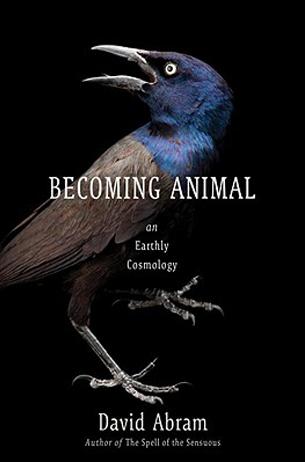 Ecologist David Abram helps examine these questions in one of the most compelling and important ecology books in decades: Becoming Animal: An Earthly Cosmology. Through encounters with wild creatures and terrains, Abram reminds us that we do not stand outside nature as independent observers, but rather fully within, embedded in a dynamic, living world. We exist only in relationship to this world. Our species, however technologically complex, co-evolved with every living thing around us. These may appear as philosophical ideas, but they are not trivial ones. These ideas prove critical to the actions we take and the success we achieve.
In Becoming Animal, Abram takes us deeper into our ‘embeddedness’ with the wild, evolving world. He suggests we will not develop those ‘true’ relationships with nature through political strategy, policy initiatives, or technological breakthroughs until we first ’apprentice’ ourselves to nature. He encourages us to spend less time in front of our computer screens talking about nature and more time being in a dialogue with nature.
Abram examines our ideas through our actions and, specifically, our encounters with the landscape and the creatures with whom we share those landscapes. His insights spring from a naturalist’s experience in the wild, through encounters with moose, spiders, forests, shamans and even the contours of his own home.
There are several important lessons here. First of all, we cannot observe nature without disturbing it. We need to understand this deeply. All of our technical ‘solutions’ to ecological challenges include further disturbances to the natural world. Most human ‘problems’ are artefacts of previous ‘solutions’.
Secondly, that world occasionally resists, fights back or seeks its own balance. We’re not in control of nature, as Rachel Carson reminded us. Nature has its own rules and rhythms. There is no ‘End of Nature’ no matter what we do. Nature is far more resilient in its diversity and native intelligence than humanity and our technologies.
Finally, this is a story about language and communication. Humans often presume that we are the only animal with ‘language’, but Abram points out that language is simply the power to convey information. Birds call a companion, beg for food, announce territory, threaten aggression and sound alarms, all with nuances of their voice. Ravens, whales and wolves have language and use it. But Abram takes this further. “Everything speaks,” he observes.
Once we remind ourselves that we are in a constant interchange with the beings and processes of our world, our actions take on a new quality. Abram invites us to feel this reciprocity with nature by paying attention to our senses more than our intellects, by spending time within the miracle of nature and paying attention.
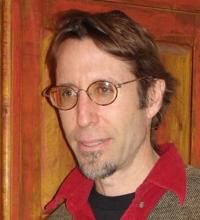 Cultures who live in reciprocity with nature understand intelligence is a quality of the whole living world. Even our science tells us that nothing exists independently in nature. There are no ‘things’ alone unto themselves in nature, only relationships. Every breath we take could remind us of this fact.
This book sets out to remind us that we exist inside a living matrix of intelligence. This is not purely philosophical. Many indigenous people know this instinctively. The small farmer and attentive gardener know this. Ecologists should know. Sentience is an ongoing encounter between our body and the larger body of the world. Our purely human dreams and technologies can only impose their patterns within the constraints of the living biosphere.
As I read Becoming Animal, I felt a great sense of relief that someone with experience and intelligence was able to articulate this message with such graceful storytelling.


