

A Visit to Florence
Did you know that it is possible to leave Arran on the 8.20am ferry and be in Paris in time for dinner, after a relaxing journey by train all the way? Or that you can catch the 9am train from Florence and be in Ardrossan early the next morning, again travelling in a relaxed and civilized manner all the way by train, and with far less of a carbon footprint than if you had flown. And while in Florence there are innumerable treasures to look at. Here are just a few highlights from a recent visit.
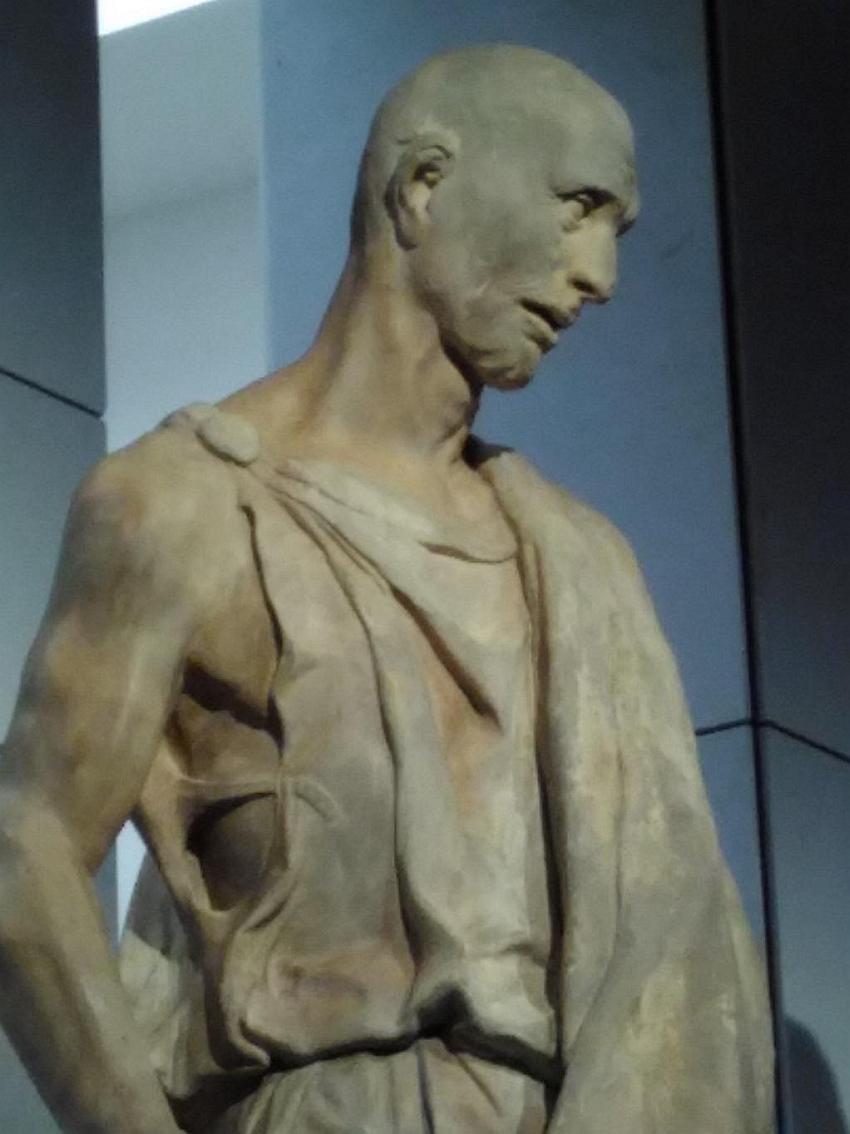
Donatello’s sculpture of the prophet Habbakuk (completed between 1423 and 1425) was originally on the Campanile of the Duomo, and is now in the Museo Dell’Opera Del Duomo. The intensity of the figure’s gaze is said to have caused Donatello to seize it and shout “Speak, speak!” It has been described as the most important marble sculpture of the fifteenth century, because of its realism and naturalism, which differed from most statuary commissioned at the time. It is also known as Lo Zuccone, or ‘the pumpkin-head’, a reference to the figure’s baldness!
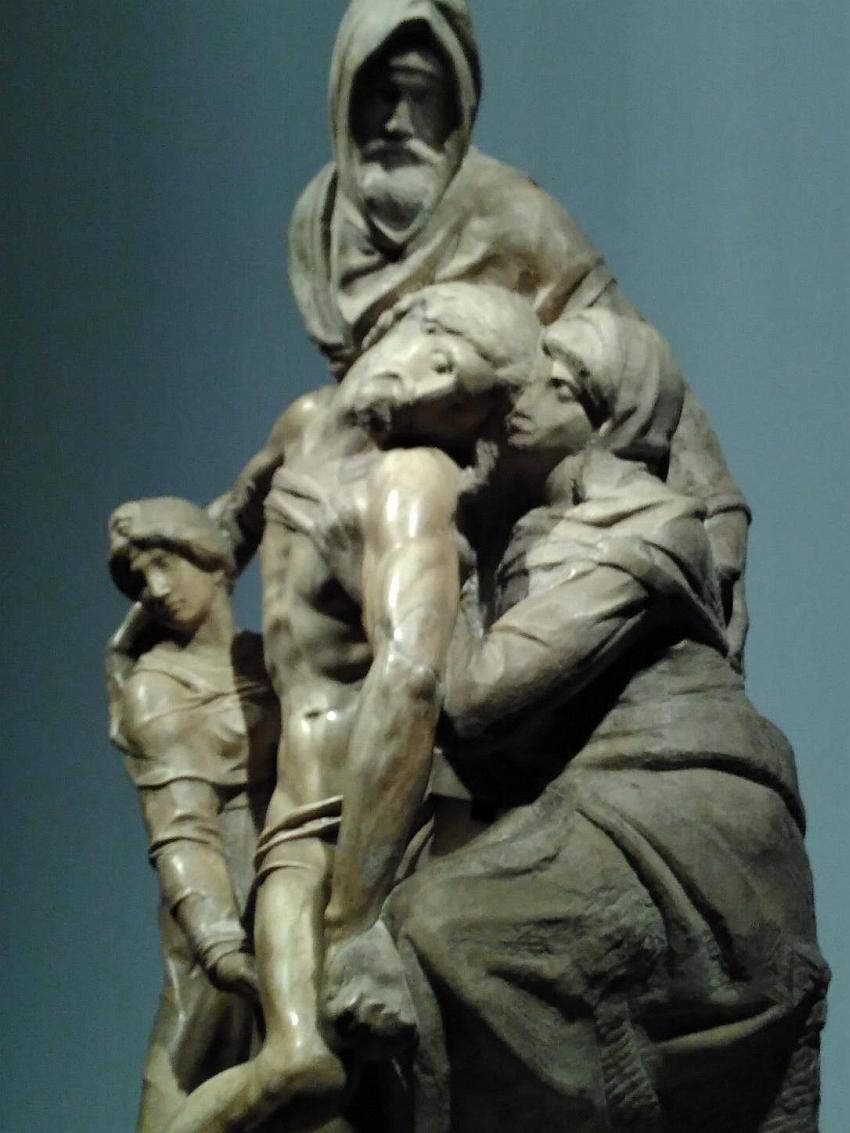
Michelangelo’s Pieta (1547-55) is also in the Museo Dell’Opera Del Duomo. One of his last works, he was almost 80 when he carved it. Vasari noted that the hooded figure of Nicodemus is in fact a self-portrait by Michelangelo, who intended the Pieta to be on his tomb. However it is suggested that he became dissatisfied with the quality of the marble and it had to be finished by a pupil after Michelangelo chopped off some of Christ’s limbs.
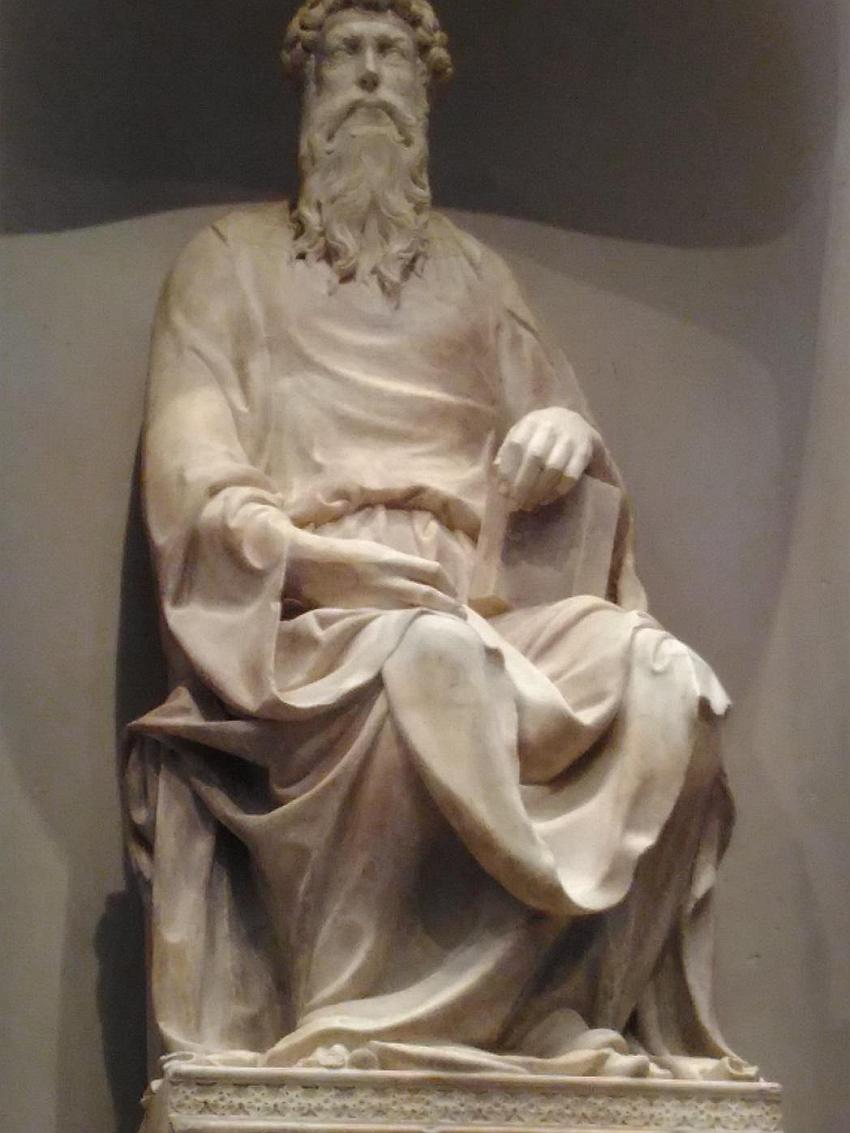
Another by Donatello, this is the colossal seated figure of Saint John the Evangelist, which until 1588 occupied a niche of the old cathedral façade. It seems to anticipate the works of Michelangelo, especially in the saint’s acute and penetrating expression, and the realistic treatment of his open hand on the book. It also is said to be one of the clearest examples of how perspective is achieved. To offset the apparent distortion that would result from the statue being seen from below, the Evangelist’s body has been made disproportionately long for his legs and thighs.
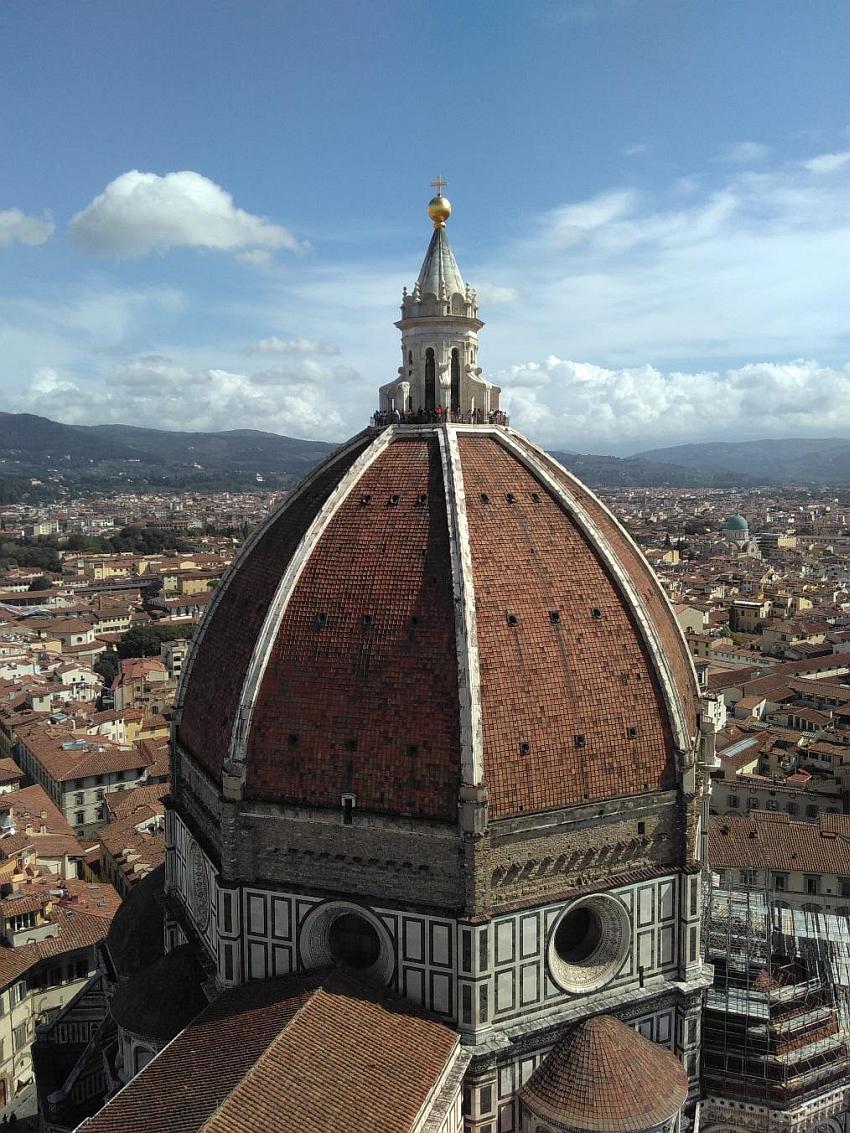
The magnificent dome of the Duomo itself, engineered by Filippo Brunelleschi and completed after his death in 1469, photographed from the Campanile. Brunelleschi’s astonishingly innovative approach to what was considered to be an impossible engineering challenge involved vaulting the dome space without any scaffolding by using a double shell with a space in between. The inner shell (with a thickness of more than two metres) is made of light bricks set in a herringbone pattern and is the self-supporting structural element while the outer dome simply serves as a heavier, wind-resistant covering. The dome is crowned by a lantern with a conical roof, designed by Brunelleschi but only built after his death. It remains the largest masonry dome ever built.


